
Reflections On a Year Spent Listening
When I first started broadcasting my radio show Red White Blues: an Anthology of America’s Music on Radio Buena Vida, the idea was that I would take research from my book-length project (still unfinished) and craft narrative episodes in which I share the records I’m listening to and the social history behind them. In principle, this would help to bring attention to the project, document its development, and to keep me writing at least 3-5,000 words every month (a paltry target). In the year 2025, I managed to script only two episodes out of eleven. In retrospect, I have either grossly overestimated my own self-discipline or I have underestimated the toll that life’s other demands place upon me. Perhaps I’m just lazy. I leave it to you, ladies and gentlemen of the jury, to decide.
On the other hand, the joy of broadcasting a radio show at all is consolidating and enriching my understanding of and feeling for the music I’m playing.
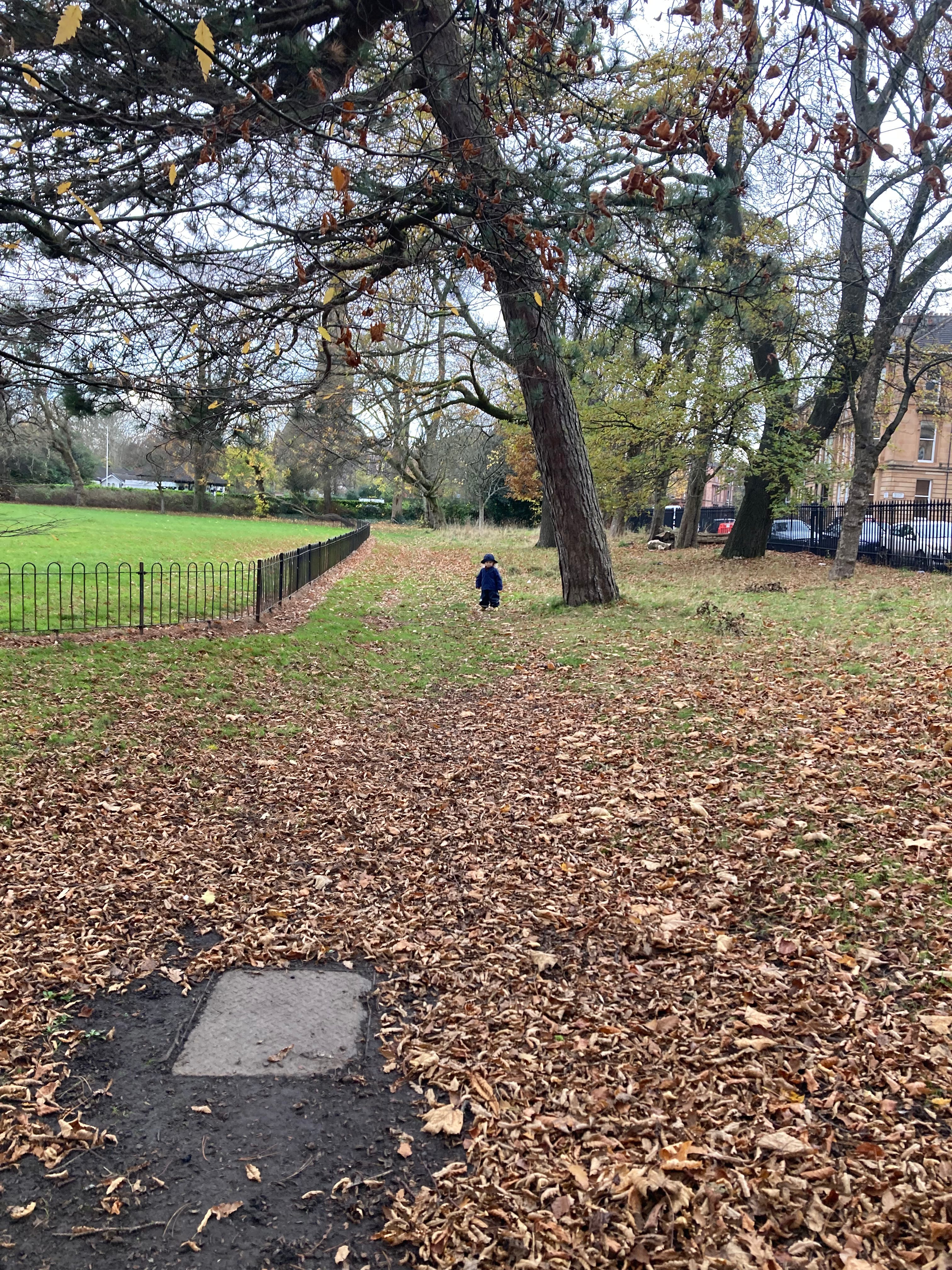
When I sat down to plan the first episode of the year back in January, I had recently become the owner of a shiny new lack of employment, thanks in large part to illness of the psychological variety, two years of a brain and soul destroying job that I can only characterise as the anvil that broke the camel’s back, to say nothing of parenthood, financial strain, having my bag with my computer in it stolen from ten feet behind me in Queens Park while I took a photo of my son, the ghosts of old problems, anger, allergies, undying ambitions—every goddamn thing. The kind of brain I have is what people describe as “autistic”, meaning that I’ll see patterns in places that many other people won’t. But on this occasion, the occasion of planning the episode, all the songs I had in mind appeared as a jumble. Eventually I ran out of time. The only pattern I could see was behavioural: I was fucking up. Again.
But I listened. I listened to the same playlists over and over again, using particular recordings in a specific sequence to calm my nerves, to make sense of things in a limited simulation of reality, a ground zero where I knew, if I took stock of where I stood, I would remember that things in my life are bad but not that bad. Bad things pass, as do the good things. Once I started getting sick of a playlist it was usually because I was getting better; I didn’t need it anymore (for the time being).
Of course, this vignette is only intelligible in terms of trends in streaming and cloud technology and it’s why I hate the algorithm so much: a mechanical salesman making educated guesses about what you want based on a dataset comprised of your previous behaviour mathematically modelled, offering the same old “new”, utterly missing the point that the thrill of having the world’s music at your fingertips lies in actively courting what you don’t already know—active being the operative word—whether that means discovering recordings you’ve never heard before or finding something new in records you’ve heard a million times.
Someone hits record then someone else plays a note: it begins, it ends one or two or so many beats later. The bars form a measure, measure upon measure, then the song is over. You hit play and the song begins and ends. Maybe you do that once every ten years; maybe once a day for three decades. Either way, by listening to music over time we come to hear ourselves passing through phases of experience, moment upon moment, a series of firsts, memories rising and unfurling leitmotifs, call and recall, the form becoming content. To listen is to actively participate in being alive, as subjecting the world’s noise to your own perception is to bring a semblance of meaning into the world.
For the March episode, I asked my friend Conor—my wonderful pal with whom I garden, talk about music and politics and the USA and who also writes about the concrete world often obscured by the abstract—to take over the show and play music from the Outer Jazz canon that I was unlikely to know. I listened and some of it wasn’t easy. When life’s got you by the balls, the kneejerk reaction is to retreat to your well-worn sound bath, to turn the noise down.
Maybe this is why I can’t watch the snuff films that pass as “social media” anymore: video may be more objective than something like music, but only in a limited way. You have to account for the fact that worm-brained scrollers like us bring our own meaning to videos of thugs in uniform murdering people in the street. Video messianically redeems the sense we deliver to it, making gibberish of otherwise plain documentary evidence. A picture is not always worth a thousand words. The roiling stream of “content” becomes a wilderness of mirrors.

Opening your ears to unfamiliar music, to music that offers no comfort, you meet the music halfway. You’re not being served; you can’t command the music, “do this for me”; you’re collaborating. It’s good for you, especially if you want to learn something, or feel something, or open yourself to the unknown.
Sometimes I think taste is a curse: it would be better to enjoy everything you hear, to at least gain some knowledge of another person’s hearing, so that sound itself becomes an unmitigated delight. Short of this musical utopianism, I try to find something noteworthy in every music I hear, even if it isn’t enjoyment. Sneering is just a failure of due diligence. We expect this of ourselves and others when the subject is not music—you can’t simply refuse to engage with all things foreign, nor should you. And you yourself are the foreigner to most of the world’s inhabitants.
The music that we do know well can present a challenge to others (especially if you’re into jazz). How would you go about sharing an artist’s work with someone who didn’t know it? If the task before you was to reduce the work of several decades to an hour-long episode, including your own reasons for thinking it’s worth hearing, could you do it? April’s episode celebrated the work of Billie Holiday, my favourite singer. As a primer of her music, it doesn’t succeed—I’ve left too much out, songs and biography, and I am not the person best fitted to singing her praises. But if I can get someone to turn their ear to an hour of Billie Holiday, it won’t have totally failed either.
By the merry month of May, I had become a working musician again after a decade of doing other things. The anvil had fallen, the camel’s back was broken—but mine remained intact. This time, however, I went back to my original love: folk music. Our lives fit into a wider totality like the cells of a single body. If that body is ravaged by sickness, is it possible for us to be well? I suspect not, but you have to try. This is what music is good for; it’s a reprieve from the fever dream of our decaying way of life. Folk music, being rooted in the lifeways of people in a specific place and time, reminds me that our own way of life is structured around disposability: of objects, of people, even of whole social orders. But the struggle to live well gives meaning to the cycles of both life and culture—beyond the business cycle.
My wife described the birth of our son and the contractions that brought him into it as resembling a train speeding through tunnels. Each contraction came with harsh, stabbing light, overwhelming brightness that seared through her core like a train bursting through fiery daylight. Then the contractions would subside and the train would pass into the dark mildness of a tunnel, where the lights ahead and behind were visible but distant. There was no pain in the dark intervals. Light, dark, light, dark; pain, relief, pain, relief. So it goes. Eventually the train stops and there before you is new life. One cycle ends, another begins.
As metaphors go, I think this one expresses the relationship of jazz to folk music aptly: new musical forms arise from the throes of another, expansion and contraction in the crucible of historical times and places. Time and place are mutually constitutive: to travel deeply into music is to travel in space and time; to listen deeply is to hear strains of places that existed then but not now. Jazz shouts the twentieth century but also whispers the nineteenth. If you can learn to understand the regional dialect of a music (and remember that place is also time), you may be able to discern the shape of a cycle—and as one cycle emerges from another, you might get lucky and catch a glimpse of the future.
The artist Tehching Hsieh created a piece of work called One Year Performance 1980-1981 or the Time Clock Piece, in which he took a single frame photo of himself at a time clock every hour on the hour for 365 consecutive days. Right at the beginning, he shaved his head so when you watch a reel of all the frames put together, the man’s hair seems to magically grow while his outfit and the background stay the same (excepting the time clock spinning cartoonishly).
I really love this artwork because it captures something intrinsic to all great and lasting works of art: the art stays the same while the world changes, so even the unchanging undergoes a transformation. Culture means something to people and meaning is not static, it is dynamic. A work of art or a song or a photograph or a even a doodle will mean different things to you the longer you live with it. And with Time Clock Piece we’re only getting the document—the work of art was the sleepless, clockwork year Hsieh sacrificed to it. I see the subject of Time Clock Piece to be not just time but art and its inseparability from life itself.
Between June and October, I traced my varied attempts at coming to grips with my own bias towards music I already know. I listened to more New Thing (a.k.a. “free jazz”), 1920s jug bands, improvisational music loosely related to jazz or not at all, and music that I didn’t necessarily understand. It’s one thing to reflect on music you’ve been listening to for years. But even Stonehenge was new at some point.
Events get the same treatment in the name of history. Gaza, for example, might one day be a prominent scar but right now it’s an open wound. Scars tell stories but stories presume an ending, while flowing blood and rubble in the making offer no such shapely closure. Even so, people make music in spite of all the noise, the lack of a sympathetic audience, or rogue states to silence them. To listen does not necessarily grant you access to a music’s emotional or cultural source. There is a music project called Gaza Birds Singing, sharing videos of music teachers in a tent in Gaza, giving children music lessons and leading group singalongs. They sing and play and smile like angels so you’d never know they were living through hell.
And that’s because it means something, and that’s why it means something.
When D’Angelo died in October, I put together November’s episode in tribute to his beautiful music. It’s easier to eulogise one musician’s passing than bearing witness to death on a mass scale. In celebrating D’Angelo’s musical life, it seemed fitting to close the episode with his own tribute to the life of Prince, the greatest pop star who ever lived (in my unprofessional opinion). If music can be more than escape or dreaming that the world is other than it really is, maybe it’s a proving ground for allowing ourselves to feel all that loss and still pay some kind of tribute. Maybe eventually it will do more—get us on our feet, rising to the challenge, which in our time is prising the helm from the hands of lunatics.
It’s a cold January so far. The frozen rooftops absorb the weak and scattered sunlight. At the end of the year, I closed back in on myself, retreating into the languid comfort of superficially gentle music preparing me for the deep freeze. But a still surface of ice hides all kinds of rumblings and a multitude of sins. When spring comes and the ice melts, hidden things float to the surface. The soil bursts, flowers rise to greet the living and the dead. You can hear it, if you listen. Or you can sing yourself to while away the time.